Friday, September 18, 2009

Sunday (villain)

Meeting the villains was my favourite part of GK Chesterton's The Man Who Was Thursday.

I found Sunday to be quite memorable and I kept picturing this statue: the head of an Emperor that was part of an exhibit in the Roman Forum. I would design him with sausage like fingers and focus on the size of his shadow. I'd adapt the book to screenplay if Tim Burton and Jim Henson would bring it to life.

Then, as Syme continued to stare at them, he saw something that he had
not seen before. He had not seen it literally because it was too large to see. At the nearest end of the balcony, blocking up a great part of the perspective, was the back of a great mountain of a man. When Syme had seen him, his first thought was that the weight of him must break down the balcony of stone. His vastness did not lie only in the fact that he was abnormally tall and quite incredibly fat. This man was planned enormously in his original proportions, like a statue carved deliberately as colossal. His head, crowned with white hair, as seen from behind looked bigger than a head ought to be. The ears that stood out from it looked larger than human ears. He was enlarged terribly to scale; and this sense of size was so staggering, that when Syme saw him all the other figures seemed quite suddenly to dwindle and become dwarfish. They were still sitting there as before with their flowers and frock-coats, but now it looked as if the big man was entertaining five children to tea.

I'm sure his existence inspired the design of Marvel's Kingpin.

Sunday, September 13, 2009

Public Deletion

Facebook is an introductory course in public relations. Members constantly think about their online image, experimenting with branding and spin.

Facebook, my great great grand, is a website that encourages members to put pictures, videos and text online. They share your media with members that you have selected, granting them the power to view and make comments ("friends" in the jargon of the site). In return for this space, Facebook shares a rudimentary level of your information with advertising firms who hope to target you with more relevant and persuasive advertising.

I have added many young friends on facebook. They are part of a generation that had been more woven into expressing themselves online. I have noticed some long term relationships come and go. A few times, I have noticed that when they break up they systemically delete all of the profile pics with their former partner. Many of the photos of cute kissing and mutual silliness disappear. What must it feel like to remove someone from your digital identity? Like burning a shoebox of love letters and gifts only in a more public forum. I think this is why I like tattoos. More permanent reminders of the past.

I feel they are specially suited to understand modern propaganda and that history is an active, daily process of selecting the past.

Photos. Stalin and Yezhov no longer in love.

Wednesday, September 9, 2009

What I Learned from Eichmann in Jerusalem

Book Review

I finally found Eichmann in Jerusalem in Washinton DC in a used book store. It proved to be one of my favourite nonfiction books for its topic (the trial of a Nazi in Israel) and for the author's (Hannah Arendt's) insight.

Background
After World War II, most of the defeated Nazi leadership had committed suicide. The remains were hung at the Nuremberg Trials (1945). Some of the Nazi leadership had escaped abroad. In 1960, Adolf Eichmann was abducted from Argentina by Israeli agents and put on trial in Israel for 'crimes against humanity'. His role in the Nazi party was in transportation -first deporting Jews abroad and then to extermination camps.

1. The banality of Eichmann
Yes, Eichmann was guilty and it was obvious that he would hang. But the trial was tied up in Israel announcing its power to the world and seeking a dramatic catharsis. The proceedings became a stage for Holocaust survivors to tell their stories (and who would deny them that right?). It was a long attempt to paint Eichmann as a murderous monster. The truth was more sinister. Arendt paints Eichmann as a cliche bureaucrat still irked from being passed over for promotion. He seemed equally satisfied deporting Jews (and wasn't this saving them?) from Germany before he was ordered to send them to death camps when the Final Solution began. He's frustrating because he fails at being a villain.

2. Judenrat. Jewish collaboration with Nazis.
Eichmann, who began his job by helping to deport Jews, often sought leaders in the Jewish community. Arendt insists that the Holocaust would not have been as successful without the help of local Jewish leadership collecting information for Nazis, maintaining a semblance of normality, and policing the ghettos. "The whole truth was that if the Jewish people had really been unorganized and leaderless, there would have been chaos and plenty of misery but the total number of victims would hardly have been between four and a half and six million people."

3. Stateless people.
The people that the Nazi party had the most success deporting and murdering where stateless. There was more resistance if they had citizenship. I feel that this provides real preventative information for future state extermination projects. If your state is denying citizenship to refugees they are enabling genocide. Romania and Hungry had particularly murderous governments. Eichmann was more active in these areas than in Poland where most of atocities from the testimonies took place.

4. Denmark was the exception
In Denmark there was more assistance for Jews to escape (to Sweden) than any other country. I have seen this mentioned several times. In Glover's book about 20th Century morality called Humanity and in this book. Both times there are were no specific cases only general mentions of money and lodging provided for escaping Jews.

5. Justice
Justice cannot be separated from history. Even the judges striving for objective sentencing end up performers in a revenge play.

The top photo is notorious. A man looks at the camera about to be executed in a ditch. It is a memento for the murderers who wrote "Last Jew of Vinnitsa" on the back.

Thursday, August 27, 2009

I Knew That?

Tales from Room cleaning II.

Found an old History of Japan exam. Let's see how I'd do if tested today!

5. Discuss the causes and results of the Meiji Restoration. First, define it either narrowly, as the change in government in 1868, or broadly, as the change of government plus the sweeping social, economic, and political changes of the following twenty years. Then proceed.

Uh... the thing about the Meiji Restoration (of 1868 of course) is that it or she or he restored all or most or some of the Meiji back to where it had been removed and needed restoration, socially, economically, and most importantly, politically. By 1888 (twenty years of changes after 1868 of course) things were socially, economically, and politically different, sweepingly. PleaseIneedthiscredittograduate. This is clear when one looks at the quantity of Meiji because many had been restored.

Uh-oh. Meiji Restoration guy looks pretty disappointed.

Looking back at Looking Back

Cleaning out my room.
I have about 100 half filled journals. Considering scanning and freeing up some volume...

This is an excerpt from late high school. It's about looking back at my early high school writing about a crush and knowing it ends unreciprocated.

I am not that person. We are different. Nonetheless the optimistic light in which most of the entries find themselves in turns my stomach. The loss of one is the gaining of the other. Innocence Experience.

I see an innocent boy wanting the best. I read his hopes and, although no tears come, my stomach aches. Like watching a bad stand-up comic waiting for laughs that won't come. I read words coming from the pen of the truly naive. I know there is an unhappy ending, I've already seen that movie (hell, I'm in it!).
I wish we had Cornflakes for tomorrow morning's breakfast.

I love how naive they both seem to me. How these words seem silly to you, future me.

Tuesday, August 25, 2009

Washington DC

DC is the America that I did not expect.

The announcer for the Metro had a lot of character. Cracking jokes, relaying travel advice and naming the next stop as if he hadn't been doing it forever. There is no fashionable shopping, only free museums and used bookstores. People read in public (saw two Vonnegut-ers). People jog, lots of fit bodies. It's a friendly collection of enthusiastic tourists. I traveled to the NE of town to visit a Salvation Army store. I found myself the only white person on the streets watching female police officers with their notepads out, interviewing tired looking people.

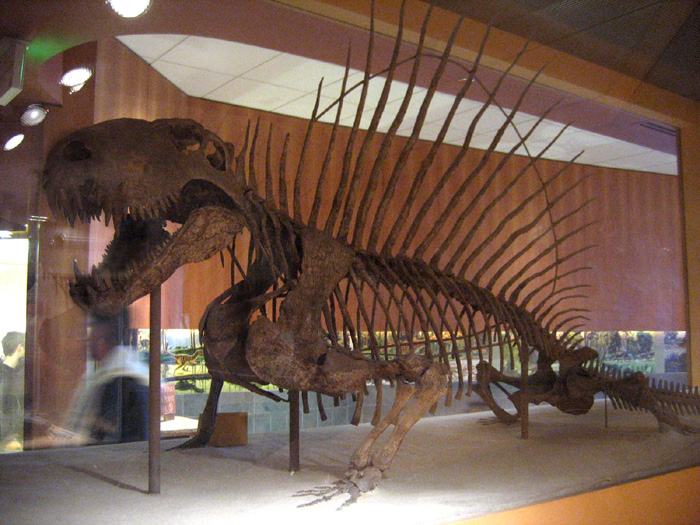
The sounds of sirens are frequent throughout the city. There is a multitude of security agencies, FBI, local DC Police, private guards. A man in a suit stands on top of the White House, using binoculars to watch the gate where the tourists gather. A child waves and he waves back. Between the Washington Monument and the Capitol Building a row of free museums and galleries displaying stuffed orangutans, Nigerian art, the capsule that the crew of Apollo 11 returned in, Watson and the Shark, brutal images of the Holocaust on the Eastern Front, paintings of plump nineteenth century children, a V2 rocket, dimetrodon bones, and I didn't go into them all.

Museum fatigue is a challenge and it's nice to head a half hour west where you can stay outside and enjoy the memorial architecture. WWII fountain, the Vietnam Wall, giant Abraham Lincoln, and the hidden gem the Korean War Memorial which I hope to make famous one day by filming at night in the rain.

DC restaurants are on a familiar 'healthy, organic, fresh'. Eating out is pleasant and quite expensive -grocery stores do not exist.

The city prides itself on their global botany. Plants bear tiny plaques explaining their Japanese or Maryland or wherever heritage. Actually, the beautiful old trees run the city. It is very common to see the red brick sidewalks rippling up in waves as the root systems destroy them. Washington DC seems okay with nature bubbling up. I've never stumbled so much in a city. I overestimated American lawsuit culture.

Meanwhile, Liz was working at the Library of Congress which, like the Smithsonian, is actually a grouping of separate buildings. The days were sweltering (still, a break from Egypt). Lots of nice dates. A great Korean brunch (Mandu), Ethiopian lunch, and we caught a few movies. A clean, air-conditioned room to retreat to and prepare breakfast with the microwave, two mugs, and a bowl Liz borrowed from the hotel restaurant.

The one glitch, I didn't bring my laptop and found my writing process to be ineffective. I produced many illegible lists, abandon upon return because they involve too much retyping. I did manage to work myself into an excited frenzy for the writing that I'm doing now. This trip was a break for me after the exhausting Trip of Plagues and I spent my days wandering, listening to psychology lectures, and reading about Ned Kelly. The driving reason I went was to share the beginning and end of each day with Liz. There were many surreal moments of satisfaction when I realized that she was actually beside me.

Took sixteen hours of buses there and about nineteen to get home. I am a professional at sleeping on planes but I'd get cut from the National bus napping squad. I can't get the lights out.

Monday, August 24, 2009

Where did I go?

I was never bitten by the 'travel bug', considering myself more of a people person than a place person. We're in the golden age of consumption and I don't know if air travel can possibly exist in the same way in your world. Travel has dominated your great great grand's life for the past five months.

It was fun to cross the Atlantic Ocean four times in ten days (in order to MC at my cousin's terrific wedding). I got to imagine my carbon footprint crushing polar bear cubs. The worst travel was the eighteen hour bus home from DC. The most memorable time was South Korea -thanks to Liz, Tom, Simon, and Foster. The worst was working this summer on the 'Trip of the Great Plague'. Stories to follow (including the full itinerary and daily ratings of the legendary trip to South Korea).

Now begins the long and enjoyable process of reflection and writing. I had planned to blog all along my journey but here we are. The only thing I wrote was that last post when the constant uprooting finally started putting cracks in my spirit. I will be creating a nice collection of stories to streamline the catching up process with my friends.

That's me in the War Memorial of Korea (a war museum with a touch of target-shooting interactivity).

Work - School Semester Program.
Paris, France. 9 days.
Strasbourg, France. 4 days.
Lauterbrunnen, Switzerland. 4 days.
Munich, Germany. 5 days.
Venice, Italy. 6 days.
Tuscany (region), Italy. 9 days.
Rocca Mare, Italy. 4 days.
Rome, Italy. 7 days.
Olympia, Greece. 1 day.
Tolo, Greece. 5 days.
Athens, Greece. 5 days.
Santorini, Greece. 7 days.
Mykonos, Greece. 6 days.
Athens, Greece. 2 days.

Back home.
Brampton, Canada. 1 day
Toronto, Canada. 1 day.

Travel with Liz.
Seoul, South Korea. 4 days.
Gapyeoung, South Korea. 1 day.
Seoul, South Korea. 5 days.
Busan, South Korea. 1 day
Seoul, South Korea. 3 days.

Back Home
Brampton, Canada. 2 days.

Work - Summer Program
Rome, Italy. 3 days.
Toronto, Canada. 1 day.
Rome Italy. 3 days.
Ravello, Italy. 4 days.
Olympia, Greece. 2 days.
Tolo, Greece. 6 days.
Athens, Greece. 5 days.
Nile Cruise (Luxor to Aswan), Egypt. 5 Days.
Cairo, Egypt. 5 days.

Back Home
Brampton, Canada. 1 day.

Visiting Liz (sent to work at Library of Congress)
Washington DC, USA. 8 days.