-->
Showing posts with label philosophy. Show all posts

Friday, December 12, 2008

The Moral Project final thoughts

Morality is not a rational project. It's not useful to design logical rules. We cannot replace the role God/Truth played in our moral history with theory. The moral answers of Kant and Mill are a flimsy attempt to prop up God up with jargon.

Morality is a psychological project. It's about child-rearing. Not rules but perspective. Train children to see themselves in others. That's the undeniable truth to base a moral code on: other people are like me. I remember reading about Jean Piaget's work about the stages of mental development in children. We have to be trained to understand that others see the world from a different perspective (the Three Mountain Problem). I don't think all adults fully develop this mental ability.

Train people to put themselves in the shoes of others and let morality develop what it will. This psychological state causes people to:

1. Abandon rigidity. It's hard to be certain when you see multiple sides of the story.
2. Be affected. Personalize tragedy instead of being numbed by numbers.

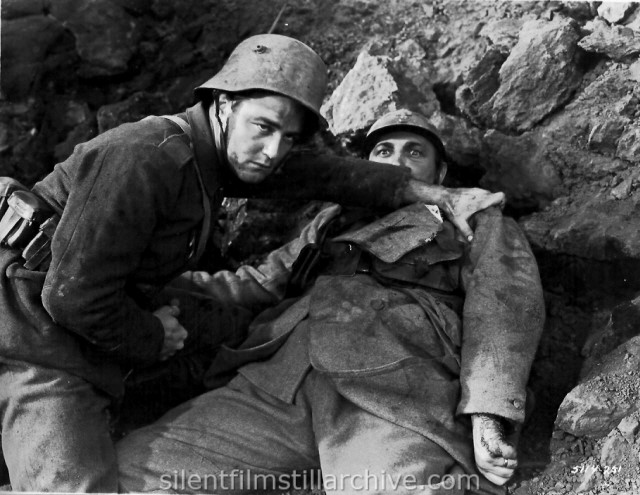
The greatest affront to morality is the inability to see oneself reflected in the enemy. Once you remove the reflection, you become free to persecute, kill, and torture.

If people are going to kill others they should see that they're killing themselves. I don't think that this will stop killing from happening -but it will make it moral.

Friday, December 5, 2008

The Moral Project

So far, Jonathan Glover's Humanity has inspired me to think about morality (an excellent book recommendation from Ashleigh and Brian).

I'm halfway through the book and, secretly, I enjoy it because it makes me feel smart. I have a background in everything discussed. I recommend this book as a concise yet detailed summary of modern world history. These are the events that are worth thinking about (The World Wars, Stalin's Soviet Union, Vietnam and the My Lai massacre, the Rwanadan genocide, the disintegration of Yugoslavia, and other definitive atrocities of the 20th Century).

I keep expecting Glover to make his move and explain how we can restore a strong moral identity in our culture. He certainly admires individuals who stand against the current (those who opposed civilian bombing, fighting in war, etc). The whole book is presented as an answer to Nietzsche who foresaw that trust in God was declining and that we should admit there is no moral standard.

A Quick History of "The Moral Project" in Europe

Phase I. Obey God because He is Truth.
Phase II. Use our rationality to discover God's Truth.
Phase III. There's no truth. Do what you want.

For instance: let's look at what prevents us from taking candy from a child.

Phase I. Good people don't steal. Besides, God would see it and send me to hell.
Phase II. Good people don't steal. Think rationally: would I want to live in a society where everyone stole all of the time?
Phase III. I might get caught.

In the modern shift (Phase III) we have less of an objective sense of what a good person is. Thus, we don't often take principled stances. A principled stance is when you stand up for something because you have a definite rule of what it should be (as opposed to a changing opinion). It might seem worth arguing how we can define, for everyone, what a good person is. But that approach is only useful if it comes from a universally accepted source. And no one agrees on what the source should be (God doesn't do it for some, rationality doesn't do it for others). That's where we're at.

I propose a different way to look at morality.

Wednesday, November 5, 2008

Literate in the darkness

Streetlights have taken night away. Before perma-day, Benjamin Franklin and his friends would run away from the maddening black abyss of nightfall and hold hands as they huddled around a candle. They were terrified into developing electricity. An exaggeration. I forget moonlight can be quite bright.

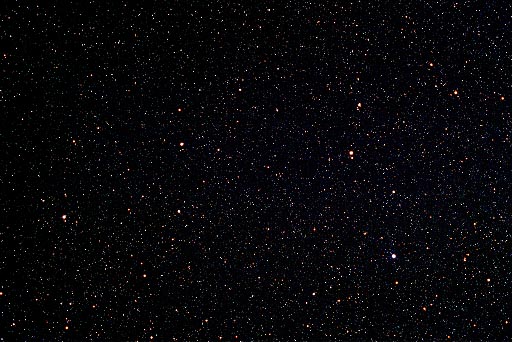
All science began with a curiosity about the stars. A nightly constant that has been observed, predicted and pondered by every civilization. Sometimes they insisted that you should connect some of them because they looked like animals (do you see the lion?). Today, the celestial wildlife is hidden by the artificial glow from our well-lit cities. I guess we're done thinking about them.

I used to work as a maintenance man at a recreation center. We cleaned up from midnight until eight am. Our ice rink was overwhelmingly lit -the glare on the white ice strained tired eyes. Our auditorium was throbbing with the dull glow of artificial light. It gives a peculiar manufactured look to colours as if we were all shot on a worn video. When we took garbage bags outside to the dumpster it was always amazing to see what time nature was trying to suggest. Inside there is one hour: on.

State education may seem like daycare for teenagers to keep their trouble causing instincts off of the street (my brother's interesting theory) but it does provide one useful tool: literacy. At no time in human history have so many people been trained and encouraged to read. I liked the metaphor of knowing the combination to a safe. Without literacy, information remains locked away. But now I prefer to think we are given a light that allows us to see more.

That should be the criteria for what tools we should expect from our teachers: lights that helps to see more. Basically, I'm arguing that our musical theater unit in drama was bullshit.

Monday, October 27, 2008

You Have to Fight This City

It is absolutely pouring outside. This is the part of the rain storm that doesn't last. The brief burst where nature turns it on hard to make us little beasts scatter. I'm watching the street corner of College and Huron. Three people are waiting to cross. One of them has an umbrella. The other two are getting soaked. Bone drenched. In a smaller town they would be huddled close together staying dry. But some where along the way the population past that point.

You would imagine that, in a city, if you were carrying your groceries home you would be bombarded with people offering to help carry them. After all, think how many people are traveling in the same direction.


If you want to be a nice person then you have to fight this city. It can be done but the city is working against you. Let's look at what City is saying.

Look how many faces there are. You can not care about all of these people. I dare you to try. What about that driver who cut you off? Can you care about them? Ha! City 1, You 0.

I contain millions of people. Statistically, some of them are bound to be very bad and scary. What if you helped them? You'd end up as another one of my robbed and murdered victims. That happens all the time in me.

You are inside of me, you are very busy. Too busy for this.

You have to fight this city.